English Version
In a previous article, we looked at the mysteries surrounding Adolf Hitler’s antisemitic ideology and the persecution of Jewish people under Nazi Germany. Hitler had contact with Jewish people in his youth and young adulthood, and historians still debate how his views shifted so violently toward hatred and discrimination.
Some interpretations argue that his resentment grew from personal failure, especially after his dream of becoming an artist collapsed. Others enter the realm of urban legend, claiming that someone ordered him to attack Jewish people, many of whom were associated in antisemitic propaganda with wealth and finance at the time.
This time, we will look at one of the stranger explanations for that ideological shift—one that sounds more realistic than a simple conspiracy tale, yet still leads into the dark world of Nazi occult thought.
What Was “Geopolitics”?
To understand this story, we first need to look at the term “geopolitics.” Today, the word can refer broadly to the relationship between geography and political power. But in the context of early 20th-century imperialism, it was often used to give an academic-sounding justification to colonial expansion and racial hierarchy.
One figure often associated with this way of thinking was Sir Halford Mackinder, a British imperial strategist from the era of World War I. In this line of argument, “geopolitics” became a framework for justifying colonial domination. Seen through modern ethical standards, much of that thinking reads as little more than a rationalization of racism and imperialism.
The unsettling point is that a man deeply familiar with this kind of geopolitics was close to Hitler around the early 1920s.
His name was Karl Haushofer.
Haushofer had achieved considerable status in the German Empire during World War I and rose to the rank of general. After the war, he taught at the University of Munich. His specialty was military studies, and he was especially knowledgeable about geopolitics. He is said to have established an institute for geopolitical studies at the university and published a specialized journal on the subject.
In the context of this story, Haushofer appears as a committed ideologue whose theories helped dress racial expansionism in scholarly clothing.
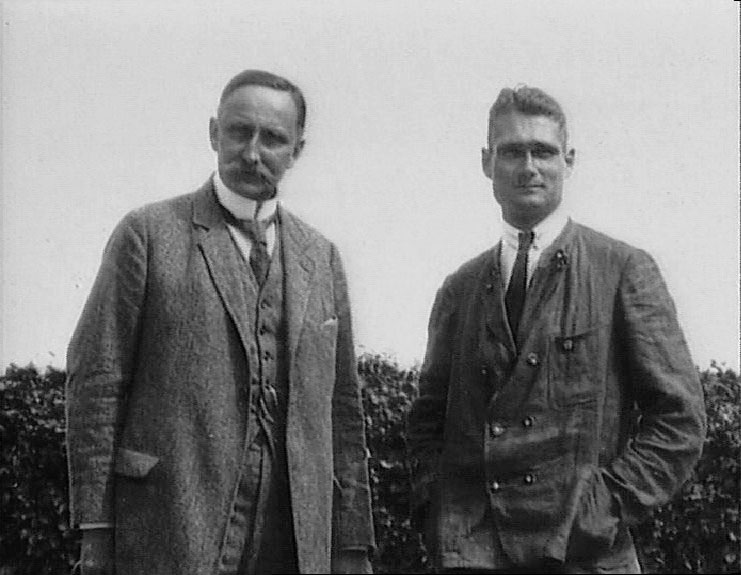
Karl Haushofer and Hitler
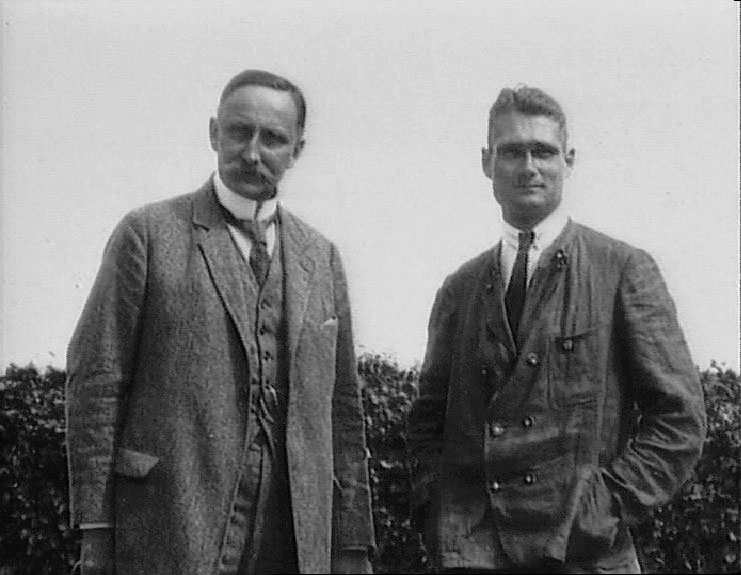
Haushofer’s connection to Hitler reportedly came through Rudolf Hess, who had been his student at the University of Munich and later became the No. 2 figure in Nazi Germany.
According to this account, Haushofer met Hitler while Hitler was imprisoned after the Munich Putsch. During that prison meeting, Haushofer is said to have spoken passionately to him about geopolitics.
Some versions of the story claim that Hitler was strongly influenced by Haushofer and that some of these ideas later entered Nazi Party policy. But the truly eerie part is that Haushofer was not only a geopolitical thinker. He also had an occult side.
As a political adviser to Hitler, Haushofer allegedly taught him that the legendary underground empire of Agartha, said to exist beneath Tibet, was the original homeland of the Germanic peoples. It is known that Nazi Germany sent expeditions toward Tibet during the war years, and in occult interpretations, these missions are sometimes linked to a search for traces of that underground empire.
At the time, Germany was devastated by defeat in World War I. The German Empire had collapsed, and the country was trapped in a severe financial crisis. Antisemitic conspiracy theories blamed Jewish people for finance and national decline, and Haushofer is said to have repeatedly insisted that Germany was being controlled by Jews.
Hitler met Haushofer while in prison. It was also during his imprisonment that Hitler wrote Mein Kampf, the book that made him infamous for its fierce attacks on Jewish people.
In this occult-political interpretation, the book echoed Haushofer’s ideas: unity under a “pure-blooded Aryan” people, combined with denunciations of Jewish people. A more extreme version of the claim even presents Mein Kampf as effectively a joint work by Hitler and Haushofer, though this should be treated as a controversial claim rather than a settled fact.
Persecution, Politics, and Expansion
If we consider the reported meeting between Hitler and Haushofer, along with the content of Mein Kampf, one possible interpretation is that Hitler’s obsessive antisemitism was shaped in part by a racist worldview disguised under the name of geopolitics.
Haushofer also became a political adviser to Hitler in the 1920s. From the time of Hitler’s imprisonment, he strongly argued for the expansion of Germany’s “living space.” Hitler later adopted the idea that military expansion was necessary as Nazi Party policy, and eventually put it into action.
Haushofer also had connections with Japan. Between 1934 and 1937, he met with Hiroshi Ōshima, Japan’s ambassador to Germany, and is said to have been involved in the path toward the German-Japanese alliance.
But people who move through such dangerous political shadows rarely meet peaceful ends.
The End of Karl Haushofer
By the 1930s, Haushofer was, in practice, close to the inner political world of the Nazi regime. However, his relationship with Hitler is said to have gradually weakened, partly because of the strange behavior of his former student Rudolf Hess.
Near the end of the war, Haushofer’s son was discovered to have been involved in a plot to assassinate Hitler. He was executed in 1945.
Haushofer himself was later regarded by the Allied forces as a significant figure because of the nature of his geopolitical theories. He was even called “Hitler’s demonic genius,” meaning that he was viewed as a dangerous influence behind Hitler’s thinking.
However, by the end of the war, Haushofer was elderly and suffered from illness. He was not tried at the Nuremberg trials. In 1946, after an attempted suicide by arsenic, he died by cutting his own abdomen.
The Occult Shadow Behind Nazi Ideology
Even from the surviving records and accounts, Karl Haushofer appears to have had a major influence on Nazi Germany and on Hitler himself. The Allied view of him after the war suggests how seriously that influence was taken.
But one question remains: why did Haushofer claim that an underground empire beneath Tibet was the birthplace of the Germanic people?
Behind that claim lies an even darker occult thread involving Gurdjieff, an occult figure connected in these stories to Tibet. That is a subject for another time.
For now, what matters is this: Nazi Germany and Hitler were not shaped only by political logic or military strategy. Their worldview also contained myths, occult fantasies, and racial legends that helped turn hatred into policy.
Japanese Language
以前、 「ナチス総統ヒトラーによるユダヤ迫害の思想と謎」 という記事でも取り上げたが、ヒトラーの青年期や少年期にはユダヤ人との交流があり、その後のヒトラーの 「差別思想への変化」 については、現在でも多くの議論がなされている。これらのヒトラーに関する研究の中には 「青年時代に芸術家への道で挫折を味わったことからの個人的な復讐である」 というものもあれば 「何者かの指令によって当時の資産家であったユダヤ人を追い込んだ」 という都市伝説的なものまで。
今回はこの思想の変化に関する不可思議な点に関して、実に現実味のあるものを紹介していこうと思う。この話をするにあたって、まずは「地政学」というあまり聞き馴染みのない言葉から解説しよう。地政学という字面だけを見るとピンと来ない人も多いだろうが、簡単に言えば 「白人主義による植民地化政策を学問的にしたもの」 である。イギリスの帝国主義者であったサー・ハルフォード・マッキンダーという人物が第一次世界大戦の時代に植民地化を正当なものにするために「地政学」という名前を付けたと言われているが、現在の倫理観で言えば単なる差別主義の正当化である。
。さて、問題はこの「地政学」を学んだ人間が1920年頃に当時のヒトラーの近くにいた事実である。その人物の名前はカール・ハウスホーファー。。第一次世界大戦で多大な功績を上げてドイツ帝国では将軍の地位まで上がり、戦後はミュンヘン大学で教鞭を取っていた。専攻は軍事学であり特に「地政学」に非常に精通していた人物であった。ハウス・ホーファーは地政学研究所をミュンヘン大学に作り、また地政学に関する専門雑誌を発行していたという。一言で言ってしまえば、徹底的な差別主義者である。
ドイツの地政学者「カール・ハウスホーファー」とヒトラーの出会い。。画像引用元: 。※画像左側の人物がハウス・ホーファーであり、画像右側は後のナチスドイツNo2であるルドルフ・ヘスである※ 。ヒトラーとハウス・ホーファーの出会いはミュンヘン一揆によってヒトラーが収監されていた1921年、ハウス・ホーファーがミュンヘン大学で教授をしていた頃の教え子であったルドルフ・ヘスを通じて獄中のヒトラーと面会している。この時、ヒトラーに対して熱心に「地政学」を語ったと言われている。
ヒトラーはこのハウス・ホーファーに多大な影響を得た とも言われており、それがナチ党としての政策に取り入れられることもあったという。しかし、本当に恐ろしいのはこのハウス・ホーファー自身もまた神秘学者という側面を持っていたことであった。ヒトラーの政治顧問となったハウス・ホーファーの思想。ハウス・ホーファーはまずヒトラーに対して チベットの地下にあると言われていた幻のアガルタ帝国こそが現在のゲルマン民族の出身地 であることを説いた。ヒトラーが戦時中にチベットなどへ兵士を派遣していたことは知られているが、これはハウス・ホーファーによって教えられた 地下帝国の痕跡を探していた 為とも言われている。
当時のドイツでは第一次世界大戦での敗戦によってドイツ帝国は解体され、凄まじい金融恐慌の状態にあった。これは現在にも言えるが、金融の裏にはユダヤ人の影があり、ホーファーはドイツがユダヤ人によって支配されていることを強く主張し続けたのだった。ホーファーとヒトラーが対面したのは獄中であったが、激しくユダヤ人達を批判したことで一気に有名になったヒトラーの著書である「我が闘争」はこの収監されていた間に書かれたものである。そして、ホーファーの主張を代弁するかのように純血アーリア人による民族統一とユダヤ人を避難した。
そもそも、この「我が闘争」の共同著作者はヒトラーとハウス・ホーファー であったのである。ユダヤ人迫害と政治的介入。。前述したヒトラーとホーファーの出会いや「我が闘争」の内容を考慮すると、 ヒトラーが強迫観念とも言えるほどユダヤ人迫害に至ったのには「地政学」という名前の差別主義が原因の1つ であったと考えられはしないだろうか?。さらに、ホーファーは1920年代のヒトラーの政治顧問となった。ヒトラーに対しては獄中の頃より生存圏の拡大を強く説いており、これに同調したヒトラーはナチ党の政策として「軍事的な拡張政策が必要である」ことを取り入れて、後に実行することになる。
ちなみに、ホーファーは当時の日本とも関わりがあり1934年~1937年までの間に日本の駐独大使であった大島浩との面会をして日独同盟にも関わっている。しかし、こういった人間は得てして幸せな結末を迎えることはない。カール・ハウスホーファーの最期。1930年代には事実上政治的にも立場的にもナチス政権の幹部であったが、教え子であったナチスNo2であるルドルフ・ヘスの奇行などによってヒトラーとは少しずつ疎遠になったとされている。また、ホーファーの息子は終戦近くにあった「ヒトラー暗殺計画」に加担していた事が発覚し1945年に処刑された。
そしてホーファー自身はその地政学の性質から連合国軍には重要な戦争犯罪人であることを指摘されていると共に「ヒトラーの悪魔的天才」であったとも言われている(ようするにヒトラーに対してそれだけの影響力を与えた危険人物だとみなされていた)。しかし、終戦時には高齢かつ持病があったため、ニュルンベルク裁判では裁かれず、1946年、ヒ素での自殺未遂を経て最期は割腹自殺でこの世を去った。ユダヤ人の迫害の影。こうした現在でも資料として残されている部分だけでも、カール・ハウスホーファーがナチスドイツ、ひいてはヒトラー自身に与えた影響は大きいとされている。
それは戦後の連合国軍の判断を見ても明らかである。では、カール・ハウスホーファーは 何故チベットの地下帝国 がゲルマン民族の発祥の地だと主張していたのか?。ここには更に深い闇の部分である、チベットのグルジェフというオカルティストが関係してくる。グルジェフについてはまた別の機会に紹介しようと思うが、少なくとも論理的な思考や科学的な根拠だけではなく、ナチスドイツやヒトラーにはオカルトの思想があったことをここでは伝えておきたい