English Version
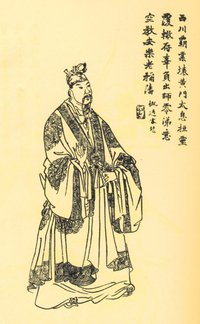
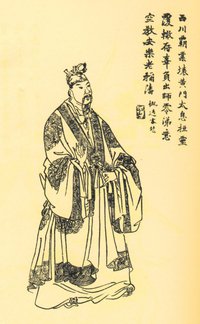
The rulers of the Three Kingdoms period are surrounded by countless stories, legends, and harsh historical judgments. Liu Shan, the son and successor of Liu Bei, founder of Shu Han, is one of the most poorly regarded figures in both the novel Romance of the Three Kingdoms and the historical Records of the Three Kingdoms.
It is even said that statues of Liu Shan were erected in Chengdu several times in the past, only to be destroyed each time. The baby A Dou, whom Zhao Yun risked his life to rescue during the Battle of Changban while Liu Bei was being pursued by Cao Cao’s massive army, later became Liu Shan. Yet for many later generations, his image hardened into that of a foolish and incompetent ruler.
So was Liu Shan, who ultimately surrendered to Wei, truly as dull-witted as history and legend often claim?
The emperor remembered as a symbol of incompetence
For many people today, the Three Kingdoms is strongly shaped by Koei Tecmo’s Dynasty Warriors series, as well as manga versions such as those by Mitsuteru Yokoyama. In those stories, Liu Shan appears as Liu Bei’s biological son, rescued together with Lady Gan during the Battle of Changban.
His early life was filled with danger. When Liu Shan was born, Liu Bei was still only a minor county magistrate in Xinye. Soon after, during the chaos of Changban, he and his mother nearly lost their lives to Cao Cao’s forces.
There is also the well-known episode in which Lady Sun, often known in popular media as Sun Shangxiang, almost takes Liu Shan away to Wu. From the beginning, Liu Shan’s life was anything but peaceful.
Because he was still young, Liu Shan did not take on major responsibilities until later. After Liu Bei finally established Shu Han, Guan Yu, Liu Bei’s sworn brother, was executed as a result of Wu’s strategy. Enraged, Liu Bei launched a campaign against Wu, and Liu Shan was entrusted with staying behind in Jingzhou.
But the war against Wu dealt Shu an unprecedented blow. Liu Bei died at Baidicheng, and Liu Shan ascended the throne at only 17 years old. As the second emperor of Shu, his greatest support was Zhuge Liang, the chancellor remembered as a genius strategist.
Zhuge Liang led five northern campaigns, but all of them ended in failure.
A kingdom losing its pillars
By the time Zhuge Liang died, most of the famous generals associated with Shu in Three Kingdoms stories were already gone. What remained were mainly capable civil officials, political advisers, and supervisors who could help maintain the government but could not easily replace the old military heroes.
Shu’s shortage of talented personnel had already been a problem in Zhuge Liang’s time. Among the generals with strong military ability, Wei Yan is especially famous. In Romance of the Three Kingdoms, Zhuge Liang is said to have noticed that Wei Yan had the look of a rebel. That episode may have been added because, in the historical record, Wei Yan rebelled after Zhuge Liang’s death.
With so many key figures gone, Shu was left in a fragile state. And, as the saying goes, history repeats itself. Under Liu Shan, internal division began to grow around the eunuch Huang Hao.
After Zhuge Liang’s death
After Zhuge Liang passed away, Shu managed to keep its shape under figures such as Dong Yun, Zhuge Liang’s son Zhuge Zhan, and Jiang Wei, who held real power in the military. But after Dong Yun died, Huang Hao’s influence expanded greatly.
Huang Hao had Liu Shan’s deep trust. Even when Jiang Wei petitioned for Huang Hao to be removed or banished, Liu Shan would not accept it. Zhuge Zhan and the others were also unable to stop Huang Hao from acting recklessly.
It is said that after becoming emperor, Liu Shan understood that politics was not his strength, so he left much of the governing to ministers such as Zhuge Liang. Even so, Liu Shan remained on the throne from 223, when he became emperor at 17, until Shu surrendered to Wei in 263 or 264. In other words, Shu survived for roughly 40 years under his rule.
Some more recent interpretations suggest that Liu Shan may not have been incompetent from the beginning. Instead, like Qin Shi Huang and others, he may have become absorbed in beliefs related to immortals and the supernatural. According to this view, he came to trust Huang Hao’s advice through divination and similar practices, and that dependence contributed to his reputation as a foolish ruler.
Was Liu Shan unlucky rather than useless?
There are anecdotes that complicate the simple image of Liu Shan as a fool. One involves Zhang Ni, also read as Zhang Yi or Zhang Sai, a general known for his ability since Liu Bei’s time. Before his final campaign, sensing his own death, Zhang Ni reportedly left words of gratitude and farewell for Liu Shan. Liu Shan, moved by those words, thanked him and wept.
If Liu Bei was able to build a kingdom because he was blessed with talented people, then perhaps Liu Shan was the opposite: an unlucky emperor who inherited a state already running out of its greatest figures.
For travelers interested in Three Kingdoms history, places such as Chengdu and Baidicheng are tied to these stories and memories. When visiting historical sites, follow local rules, stay in public areas, and treat tombs, statues, and memorial spaces with respect.
Japanese Language
三国志時代の君主には様々な逸話が残されています。蜀を興した劉備の後継者となった劉禅は三国志演義においても、歴史書である三国志での記述においても評価の低い人物の1人だと言えるでしょう。実は成都には過去に劉禅の像が何度か作られたそうですが、その度に壊されるという憂き目に合っているのも劉禅です。劉備が曹操の大軍団に追われた「長坂の戦い」において趙雲が命がけで助けた阿斗(あと)という赤子こそ後の劉禅だったのですが、その評価は後世のほとんどの人物によって「暗愚な人物」というイメージが植え付けられています。
そこで今回は、魏に降伏した劉禅が本当に暗愚な人物であったのかを考えていきたいと思います。暗愚な人物の代表にされた劉禅。。画像引用元: 劉禅 。一般的に三国志のイメージといえばコーエーテクモの「三國無双」が強い、もしくは、横山光輝氏などが描いた三国志なども有名です。劉禅は長坂の戦いで甘夫人と共に助けられた劉備の実子ですが、三國無双などで有名な孫尚香こと孫夫人によって呉へ連れて行かれそうになるなど、数多くの苦労を重ねています。劉禅が生まれた頃は、劉備自身が、まだ新野の小さな県令であった上に、その後に起こった長坂の戦いでは危うく母親と共に曹操軍によって危うく命を落としかけるのです。
まだ幼かったこともあり、劉備がようやく蜀漢を興し、その後、呉の計略によって劉備の義兄弟であった関羽が処刑され、これに怒った劉備が呉の討伐軍を起こした時に初めて荊州の留守を任されます。しかし、呉との戦争において蜀はかつてないほどの打撃を受けてしまい、白帝城で劉備は亡くなります。若干17歳で即位し、二代目の皇帝として蜀をおさめることになった劉禅には唯一「天才軍師」であった丞相の諸葛亮だけが頼りだったのです。稀代の天才軍師と呼ばれた諸葛亮も5回に渡って北伐を目指して進軍しますが、全て失敗に終わります。
そして諸葛亮が亡くなった頃には、三国志で有名な武将のほとんどは蜀の国から亡くなっていた状態でした。そんな大黒柱を失った蜀に残ったのは 能吏と呼ばれた、政治におけるご意見番やお目付け役といった人物だけになってしまいます。。蜀の人材不足は諸葛亮の時代から既に問題に上がっていたところがポイントかな。武力の強かった武将と言えば魏延が有名だけど・・・。反骨の相があると諸葛亮に言われたとされる魏延は諸葛亮の死に乗じて反乱しちゃったからね。おそらくですが、三国志演義で魏延に「反骨の相がある」ことを諸葛亮が指摘するエピソードが加わったのは、正史において魏延が諸葛亮の死後に反乱を起こしたことに起因するのかなと思いますね。
さて、こうなるとやはり国の主要な人物はほとんどが残っていない状態だったのですが、歴史は繰り返すという言葉通り、劉禅は宦官であった 黄皓(こうこう)という男を中心に蜀の内部においての分裂が起きてしまうのです。。諸葛亮の死後。諸葛亮が亡くなった後には、董允(とういん)や諸葛亮の息子であった 諸葛瞻(しょかつせん)、そして軍部の実権を握った姜維などによって一応の国の形を留めていましたが、董允が死亡したことによって黄皓(こうこう)の実権が大きくなっていきます。
。黄皓は劉禅からの信頼が非常に厚かったため、姜維が追放などを上奏しても受け入れられず、諸葛瞻達にも黄皓の暴走を止めることは出来ませんでした。。皇帝となってからの劉禅は、政治は自分が苦手としていることを悟っていたため、諸葛亮らの臣下に任せきりにしていたとも言われています。しかし、223年に17歳で即位した劉禅は魏に降伏する263年~264年の約40年に渡って蜀を存続させました。近年の説では、実はもともと有能であったにも関わらず、始皇帝などと同じく神仙思想に染まってしまい、 黄皓が占いなどで助言することを信じてしまったために暗愚な人物になってしまったとも語られているのです。
。その証拠に劉備の時代から有能として知られていた 張嶷(ちょうぎ、またはちょうさい)という将軍の1人には、自らの死を悟った最後の出陣前、劉禅に感謝と別れの言葉を残し、またその言葉に劉禅は感謝し涙したという逸話なども残ってたりするのです。。劉備が人材に恵まれて国を興せたと見るのであれば、劉禅は逆に人材に恵まれなかった不運な皇帝であったのかも知れませんね