English Version
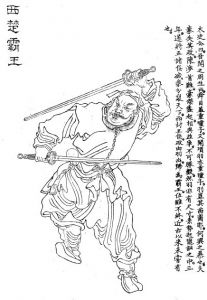
Even after helping bring down the Qin dynasty, Xiang Yu lost the struggle for supremacy against Liu Bang and died by his own hand. Across China’s long history, many generals became infamous for killing on a terrifying scale, and Xiang Yu was one of them.
He came from a powerful Chu military family. His grandfather was Xiang Yan, the great general said to have defeated a 200,000-man Qin army led by Li Xin. His uncle, Xiang Liang, later gathered the anti-Qin forces after the death of Chen Sheng, one of the central figures in the Chen Sheng and Wu Guang uprising that helped trigger Qin’s collapse. In other words, Xiang Yu stood at the center of a force that shaped a turning point in history.
Looking at the struggle between Xiang Yu and Liu Bang, there were three major confrontations. Xiang Yu won two of them. And yet the final victor of the age was Liu Bang. Xiang Yu’s rule over all under heaven never arrived.
This is the story of Xiang Yu: a general with overwhelming military power who still lost to Liu Bang.
The strength of Xiang Yu, the elite general of Chu
Xiang Yu’s life began on what could be called an elite path. Under the protection of his uncle Xiang Liang, he took advantage of the Chen Sheng and Wu Guang uprising and killed the governor of Kuaiji Commandery. According to tradition, nearly 100 of the governor’s subordinates then attacked Xiang Yu, only for him to cut them down alone.
Even the famous Miyamoto Musashi is traditionally said to have faced a little over 70 opponents in the duel against the Yoshioka school at Ichijoji. Whether taken as literal history or as legend, the story makes one thing clear: Xiang Yu was remembered as frighteningly strong.
The officials of Kuaiji were reportedly so terrified by his strength that they had little choice but to follow him. After replacing the commandery governor, Xiang Yu joined the anti-Qin uprising.
A debut in rebellion: burying the enemy alive
The rebel army’s first target in its campaign against Qin was a region called Xiangcheng. Sent there under Xiang Liang’s orders, Xiang Yu struggled at first. In the end, however, he reportedly buried all the enemy soldiers inside the city alive.
It was a brutal debut, almost a model of massacre.
Xiang Yu’s methods were often extremely harsh. Even his allies are said to have criticized his severity, yet he continued to fight in this violent style. If Liu Bang can be remembered as a man who sometimes avoided battle, then the two men’s approaches to attacking Qin could hardly have been more different.
Defeating Li Si’s eldest son
By this time, Qin Shi Huang, the First Emperor, had already died. But Xiang Yu, working together with Liu Bang, defeated Li You, the eldest son of Li Si, who had been one of the First Emperor’s closest ministers.
At this stage, Xiang Yu and Liu Bang were not yet enemies. They were both members of the rebel forces, fighting across different regions centered around what is now Henan Province.
While these battles were underway, however, Xiang Yu’s uncle Xiang Liang was killed in a night attack by the Qin general Zhang Han. After this, Xiang Yu’s influence within the anti-Qin Chu faction seems to have temporarily weakened. Xiang Liang had supported King Huai of Chu as a symbolic ruler, and that court became the center of the movement.
Xiang Yu wanted revenge for his uncle and hoped to go to Guanzhong together with Liu Bang. But the elder statesmen opposed the idea, citing Xiang Yu’s cruelty at Xiangcheng. At the time, Xiang Yu was also in the position of deputy general, so he could not move freely.
Xiang Yu seizes power through rebellion
When Xiang Yu was deputy general, the man appointed as senior general was Song Yi. King Huai had entrusted Song Yi with an anti-Qin army said to number around 50,000, with Xiang Yu serving beneath him.
At that moment, the state of Zhao was being suppressed by Qin, and Xiang Yu’s army was dispatched as reinforcements. But Song Yi did not advance all the way to Zhao. Instead, he halted the march and spent 46 days simply observing the situation.
Xiang Yu argued that if the Chu army attacked from the outside while Zhao attacked from within, they could defeat the Qin forces. Song Yi rejected the proposal.
Worse, with food already scarce, Song Yi held a large banquet because his son was leaving for the state of Qi. The soldiers grew exhausted both physically and mentally. Xiang Yu decided that Song Yi was wasting precious time and supplies when the fate of Chu was at stake.
Believing that Qin would become even stronger if Zhao fell, Xiang Yu killed Song Yi. The other generals supported the act, and Xiang Yu was made acting senior general. The army then resumed its march to aid Zhao.
The Battle of Julu: revenge and 200,000 buried alive
The Qin army surrounding Zhao was said to number more than 200,000, led by Zhang Han, the general responsible for Xiang Liang’s death.
Xiang Yu’s Chu army charged with only around 50,000 men, yet displayed astonishing force and succeeded in breaking the siege of Zhao. According to the story, Xiang Yu crossed the Yellow River with only three days of food remaining, turning the entire Chu army into a death-or-glory force with no easy way back.
With their backs figuratively against the water, Xiang Yu’s soldiers smashed through the larger Qin army. His fame as a warrior spread among the anti-Qin states.
As Xiang Yu’s strength became widely known, he gradually moved from being the senior general of Chu to a leader commanding soldiers from many states. He pursued Zhang Han’s defeated Qin forces and won battle after battle.
Riding this momentum, Xiang Yu eventually forced Zhang Han to surrender. For a time, as many as 200,000 Qin soldiers came under Xiang Yu’s control.
Then Xiang Yu judged that this massive surrendered army might rebel. He had all 200,000 Qin soldiers buried alive.
Zhang Han somehow survived, but he earned the hatred of many Qin people. In the end, he was driven into a corner by Han Xin and killed himself.
Qin’s fall and Liu Bang’s exile
After continuing to seize Qin territory, Xiang Yu’s army finally moved toward Xianyang, where Liu Bang had already entered first. Liu Bang, having captured Xianyang ahead of him, initially did not welcome Xiang Yu’s arrival. But Xiang Yu had pacified much of Qin’s territory and was enraged by Liu Bang’s attitude. He prepared to attack Liu Bang.
Liu Bang, alarmed, made peace through Xiang Yu’s uncle, and Xiang Yu forgave him.
Once Xiang Yu entered Xianyang, he executed Ziying, the last emperor of Qin, who had surrendered to Liu Bang. With that, the Qin dynasty was completely destroyed.
Xiang Yu then looted the treasures of Xianyang and set the city on fire. Because Xianyang was the political center of China at the time, some advisers argued that he should make it his base. Xiang Yu dismissed the idea. After the looting and burning, he is also said to have had a critic boiled alive.
Having ended Qin rule, Xiang Yu made the various lords who had contributed to Qin’s fall into kings of different regions. The problem was what to do with Liu Bang.
According to the promise made with King Huai, whoever entered Guanzhong first would become its king. Liu Bang had entered first, so he was made king of Guanzhong. Xiang Yu, meanwhile, called himself the Hegemon-King of Western Chu and placed himself above the 18 kings.
But this settlement angered many lords. Later, that resentment would help tighten the noose around Xiang Yu himself.
The showdown with Liu Bang
Liu Bang had been given border regions such as Guanzhong and Shu. Around this time, Han Xin, who had previously been under Xiang Yu, joined Liu Bang’s forces.
At first, Liu Bang did not make much use of Han Xin. But after Xiao He recommended him, Han Xin became a great general under Liu Bang.
Meanwhile, King Huai had taken the name Emperor Yi. But as even Emperor Yi’s followers began to oppose Xiang Yu, Xiang Yu had Emperor Yi assassinated.
Considering that Chu was central to the political order of the time, Emperor Yi was essentially a supreme ruler in name. Liu Bang used this as a justification and sent proclamations calling for the overthrow of Xiang Yu.
Many lords already resented Xiang Yu’s earlier distribution of kingdoms, and they sided with Liu Bang as he marched east. His army swelled to a force said to number 560,000.
Xiang Yu, however, had earlier received a false letter from Liu Bang’s side and had left his main base. Liu Bang’s enlarged Han army occupied Pengcheng, the Chu capital area. But then Xiang Yu returned from campaign with only 30,000 troops and launched a sudden attack.
The situation reversed at once.
Some of the lords who had gathered around Liu Bang began to defect back to Xiang Yu. Liu Bang retreated, and Xiang Yu won.
Liu Bang’s surprise attack and Xiang Yu’s counterattack
After driving Liu Bang back, Xiang Yu’s army might have seemed secure. But this was where Xiang Yu’s carelessness showed.
Liu Bang had Han Xin.
Liu Bang and Han Xin divided their efforts. While Liu Bang kept Xiang Yu occupied, Han Xin would encircle and capture the surrounding regions one after another. Liu Bang’s forces, fighting Xiang Yu directly, could not easily defeat him. But Xiang Yu also could not decisively destroy Liu Bang.
While the two remained locked in a stalemate, Han Xin rapidly expanded his power. Before long, he controlled enough land and soldiers that Xiang Yu could no longer ignore him.
Xiang Yu sent an envoy to persuade Han Xin to join Chu, but Han Xin, feeling indebted to Liu Bang, refused.
Because the war between Xiang Yu and Liu Bang dragged on, the two sides eventually made a truce and agreed to return to their own territories.
But then Liu Bang broke the truce. As Xiang Yu’s army was heading back to Chu, Liu Bang launched a surprise attack, essentially attempting to deceive and strike him from behind.
Xiang Yu was caught off guard, but at first he pushed Liu Bang’s army back because Han Xin did not move quickly. Once Han Xin finally joined Liu Bang’s side with 300,000 troops, however, Xiang Yu no longer had the strength to continue the fight.
The encirclement behind the phrase Four Sides, Chu Songs
After Liu Bang’s surprise attack broke the truce, the surrounding lords, including Han Xin, gradually sided with Liu Bang.
In the final great battle, known as the Battle of Gaixia, Liu Bang and his allies surrounded Xiang Yu’s army from all sides. They are said to have sung songs of Chu from every direction.
Xiang Yu and his soldiers, exhausted by years of war, reportedly wept when they heard those songs. This is traditionally given as the origin of the Chinese expression often translated as being surrounded on all sides, or having no way out.
The death of Xiang Yu
The battle was already hopeless, but Xiang Yu continued fighting even when only a few dozen horsemen remained with him.
According to the Records of the Grand Historian, when he had only 28 riders left, he divided them into four groups and still killed more than 100 Han soldiers.
As the retreat continued, Xiang Yu lost more and more companions. At last, he reached the banks of the Yangtze River at a place called Wujiang. The local station chief urged him to cross the river and rebuild his strength in Jiangdong, but Xiang Yu refused. Some accounts say he killed several hundred more pursuers at the end.
Then he recognized an old acquaintance among the men chasing him. Xiang Yu reportedly said that his head was valuable and that he would give it to him. He then cut his own throat.
About seven years after raising his army, the life of the slaughtering general ended at the age of 31.
Why did Xiang Yu lose to Liu Bang?
Xiang Yu had overwhelming strength, yet he lost to Liu Bang in the end. One major reason may be that he destroyed his own moral justification.
Liu Bang is said to have listed ten crimes in a confrontation with Xiang Yu. One of them was the killing of Emperor Yi. Since Xiang Yu was originally a warrior of Chu, murdering Emperor Yi, who at least formally stood at the top of Chu as King Huai, was an act that looked like outright rebellion.
Liu Bang used these circumstances skillfully. Han Xin’s unexpected rise was also a grave miscalculation for Xiang Yu.
Still, the direct turning point feels like Liu Bang’s decision to break the truce and launch a sudden attack. Liu Bang is often described as a man of virtue and charisma, but if he were truly so virtuous, would he have made a false peace only to strike by surprise?
Then again, the number of people killed over Xiang Yu’s career as a general is almost unimaginable. In that sense, perhaps it was only natural that public feeling shifted toward Liu Bang in the end.
Travel note: many places connected to this story are historical regions or modern cities in China rather than preserved battlefield sites. If you visit related museums, ruins, or memorial areas, use official access routes, check local rules, and avoid entering restricted or unsafe locations.
Japanese Language
秦国を滅ぼしたにも関わらず、劉邦との勢力争いに敗北した結果、自刃して果てた 項羽(こうう) 。中国の長い歴史を見ると 戦乱時代に殺戮を繰り返した将軍が数多くいますが、項羽もそんな1人 でした。祖父は李信(りしん)率いる20万の秦国軍を敗北させた大将軍の項燕(こうえん)を持ち、叔父の 項梁(こうりょう)は秦の滅亡のキッカケとなった陳勝・呉広の乱の中心人物であった陳勝が亡くなった後に、反秦連合をまとめ上げたという、いわば、 時代の転換期において中心となった勢力が楚の国の項羽 です。
。項羽と劉邦の覇権争いを見ると、大きく分けて3回の戦いがあり、その内の2回は劉邦軍に勝利していました。しかし、時代の勝者は劉邦となり、項羽の天下が訪れることはなかったのです。今回は圧倒的な武力を持ちながらも劉邦との争いに破れた項羽について紹介していきたいと思います。楚の名門、将軍項羽の実力とは。。画像引用元: 項羽 。項羽の人生はいわばエリート街道まっしぐらという道のりでした。叔父の 項梁の庇護を受けながら、陳勝・呉広の乱に乗じて会稽郡の群守を斬り殺し、 さらにその部下が100人近くで項羽に襲いかかるも、これを1人で斬り伏せた と言われています。
。あの宮本武蔵ですら一乗寺の吉岡決闘で70人と少しという言い伝えですから、史実であってもとにかく強かったということが分かる逸話です。あまりの強さに当時の会稽郡の役人達は付き従う以外に道はなく、そのまま項羽の部下となったとされています。会稽郡守に取って代わった項羽はそのまま反秦軍への蜂起に参加します。反乱軍のデビュー戦で城兵を生き埋めに。。打倒秦を掲げた反乱軍としてまず最初に狙ったのは、襄城と呼ばれる地域でした。項梁の命令によってこの地に攻め入った項羽は、最初は苦戦するものの、最終的には城内の敵兵全てを生き埋めにするという殺戮のお手本のようなデビューを飾ることになります。
。項羽は苛烈な戦い方が非常に多く、これらの行為は味方にも諌められるほど激しい戦いを以降も繰り返していきます。以前、戦わなかった劉邦を紹介しましたが、まさに2人の秦への攻撃は正反対の道を歩んでいくことになるのです。李斯の長子を討ち取る 。既に、始皇帝であった嬴政は亡くなっていましたが、その腹心であった李斯の長子である李由という人物を劉邦と協力して討ち取っています。この頃に項羽と劉邦は、まだ敵対関係とはなっておらず、同じ反乱軍の一員として現在の河南省を中心に各地を転戦することになります。
しかし、これらの戦いをしている間に、叔父の 項梁が秦の章邯(しょうかん)によって夜襲をかけられ亡くなってしまったのです。。これがキッカケとなり、 項梁が楚王として持ち上げた懐王を中心とした反秦を掲げた楚の中では一時期発言力が少なくなっと見られています。。叔父の敵討ちを望んだ項羽は、劉邦と共に関中行きを望んでいましたが、老臣達に襄城での残忍な行為を理由に反対されてしまうのです。。また、項羽はこの頃にいわゆる副将の地位にあり、自由に動くことが出来ませんでした。
地位を反逆によって奪い取った項羽。。項羽が副将となっていた時に、上将軍に任命されていた人物を 宋義(そうぎ)と言いました。。懐王から約5万とも言われる反秦軍の軍勢を任されており、副将の地位に項羽がいたのです。。ちょうどこの時、趙の国が秦国から反乱の鎮圧が行われていたため、援軍として派遣されたのが項羽達の軍勢でした。しかし 宋義は趙の国まで攻め上がらずに、道中で46日間もの間、戦況を見るだけという進軍停止をしてしまいます。。項羽は外からの楚軍(項羽達)と中から趙軍が攻めれば秦の軍を打ち破れることを進言するも、それらを却下されます。
さらに、宋義は息子が斉の国へ行くために食料の乏しい中、大宴会を開くなどの行為を続け、兵士達は精神的にも肉体的にも疲弊していくのです。これを見かねた項羽は、 宋義には楚の命運が掛かっているのにも関わらず、いたずらに時間を浪費し、息子のために貴重な食料などを消費していると宋義の殺害を決意します。。項羽は秦軍が趙を破ってしまっては、さらに秦を勢いつかせることになると判断し、宋義を殺害。諸将もこの行為には賛同し、仮の上将軍を項羽とした上で趙への援軍として再度進行することに。
項羽の大殺戮!敵討ちと20万人を生き埋めにした鉅鹿(きょろく)の戦い。。趙を包囲していたのは、項羽の叔父を死に追いやった秦の 章邯が率いる20万以上もの大軍だと言われています。。約5万の兵力で突撃した項羽の楚軍は、信じられないほどの力を発揮し、趙の包囲を解くことに成功しました。この時、項羽は3日間の食料のみを残して黄河を渡り、楚軍全員を決死隊にしたそうです。いわゆる背水の陣となった項羽達は数で勝る秦軍を蹴散らしたことによって、項羽の武名は反秦を掲げた各国に伝わることになります。
項羽が強いことが知れ渡った結果、当初は楚軍の上将軍だった項羽は、徐々に多くの国の兵士をまとめる立場になっており、一旦は敗退した 章邯達の秦軍を追撃しては連戦連勝を重ねていきます。。一気に勢いに乗った項羽軍に、 章邯は降伏を申し出ることになり、一度は秦軍の20万も項羽の配下に入ることになりました。。しかし、20万の大軍が再び反乱の兆しがあると判断した項羽は、 秦軍の20万人の兵士を全て生き埋め にしてしまうのです。章邯は何とか生き残りましたが、多くの秦人の怨みを買ってしまい、最終的には韓信に追い詰められて自害してしまいます。
。こうして秦の土地を奪い続けた項羽の軍はようやく劉邦が先に入っていた咸陽へ向かおうとしますが、関中で足止めをされます。先に咸陽を落とした劉邦は後から来た項羽を最初は良しとしなかったものの、多くの秦の土地を平定していた項羽は、この劉邦の態度に激怒し、劉邦を攻撃しようとします。しかし、慌てた劉邦が項羽の叔父を通じて和睦したことによって項羽は劉邦を許します。秦の滅亡と劉邦の追放。。咸陽に入ることが出来た項羽は劉邦に降伏をしていた秦帝国最後の皇帝であった子嬰を処刑して、秦を完全に滅亡させます。
さらに咸陽にあった財宝の数々を略奪し、火を放って焼き払いました。咸陽は当時の中国の中心であったため、ここを本拠地とすべきという意見をした論客もいましたが、これを一蹴した項羽は略奪と放火をした後に、それを批判した論客を釜茹での刑に処したとも言われています。こうして秦の支配を終わらせた項羽は、秦滅亡に貢献した諸侯を各地の王にしていきますが、問題となったのは劉邦の処遇でした。懐王との約束では、先に関中に入った者が王となるという取り決めがあったため、劉邦は関中の王にし、自身は西楚の覇王を名乗り、18人の王の一番上に立つことになったのです。
しかし、この封建は諸侯の反感を買う内容だったため、後に項羽自身の首を締める結果となっていきます。。劉邦との決戦。関中や蜀といった辺境の地を与えられた劉邦でしたが、この頃に項羽の元にいた韓信が軍に所属することになります。最初は韓信を重用しなかった劉邦でしたが、蕭何(しょうか)の推挙によって韓信は劉邦の元で大将軍へ。一方で項羽。このころ懐王は義帝と名前を変えていましたが、その臣下も項羽に歯向かうようになってきたため、 懐王も暗殺 してしまいます。
楚が中心となっていた当時の情勢を考えれば、義帝はいわば皇帝であったため、これを大義名分として 劉邦が各地に項羽討伐の檄文を送る ことになります。元々、項羽の行なった封建に不満のあった諸侯の多くは東征していく劉邦の味方になり、56万もの大軍に膨れ上がります。一方、項羽は先に劉邦陣営から偽の手紙を受け取っていたため、本陣を留守にした状態でした。膨れ上がった劉邦の漢軍は項羽の討伐に向けて 楚の彭城まで占領しますが、ここに遠征から戻ってきた項羽の軍勢3万が急襲し、一気に形勢は逆転へ。
。劉邦の元に集まった諸侯の中からも項羽の陣営に寝返る者が出始め、劉邦は退却し、項羽が勝利します。劉邦の奇襲と項羽の反撃。。劉邦達を退けた項羽軍はこれで安泰かと思われましたが、項羽の油断はここにありました。劉邦の元には、韓信が居たのです。劉邦と韓信は二手に分かれ、劉邦が項羽と争っている間にその周囲を韓信が次々と包囲していくという作戦を立てて実行します。直接項羽の軍勢と戦っていた劉邦軍は、なかなか項羽を攻めきれませんでしたが、同様に項羽も劉邦を攻めきれない状態が続きました。
2人の膠着状態が続いている間に、韓信は一気に勢力を拡大し、もはや項羽にとっても無視出来ないほどの巨大な領土と兵士を持つ存在になってしまうのです。項羽は一度韓信に使者を出して楚につくように説得しますが、劉邦への恩義を感じていた韓信はこれを拒否します。項羽と劉邦の戦いも長期戦になったため、一度休戦協定が結ばれ、それぞれが国へ帰ることになりました。しかし・・・。この 休戦協定を破り、楚へ帰ろうとした項羽の軍を劉邦がだまし討ちを狙って急襲 します。
奇襲された項羽でしたが、韓信がなかなか動かなかったため、最初は劉邦軍を押し返しますが、やがて韓信が30万の兵力で劉邦側についてしまうと、もはや項羽に戦える力は残っていませんでした。四面楚歌の由縁になった項羽包囲網。劉邦の休戦協定を破った奇襲から、しばらくすると韓信を含めた周囲の諸侯も劉邦の味方となっていきます。垓下(がいか)の戦いと呼ばれた最後の大きな戦争では、項羽の軍を四方から劉邦とその協力者達が取り囲み、四方から楚の歌を歌ったと言われています。
長い戦いに疲れ切っていた項羽や兵士は、この楚の歌を聴いて涙を流したと言われており、これが「 四面楚歌 」の語源になっています。項羽の最期。もはや勝ち目のなくなった戦いではありましたが、項羽は配下が数十騎になっても諦めずに戦い続けていきました。史記によれば 28騎となった配下を更に4隊に分けた後にも100人以上の漢軍を倒している のです。退却戦となったこの戦いで次々と仲間を失っていった項羽は最期に長江のほとりにたどり着きます。烏江と呼ばれるこの場所にきた項羽でしたが、烏江の亭長が長江を渡って江東で再起を図って欲しいと言われたものの、これを拒否し、最期に追手をさらに数百名倒したとも伝わっています。
。そして、追手に旧知の人物を見つけ、自分の首には価値があるから譲ってやると言い残して自分の首をはねたと言われています。挙兵から約7年、戦い続けた殺戮将軍の人生は31歳で幕を閉じます。項羽はどうして劉邦に負けたのか?。圧倒的な力を持ちながらも、最期は劉邦に負けた項羽は大義名分を自ら消してしまったことに大きな原因があるかもしれません。劉邦は10の罪を項羽との対話で語ったと言われていますが、その中の1つが義帝の殺害でした。項羽自身は元々が楚の武人であったため、 懐王として形だけでも楚の頂点にいた義帝を殺すことは完全なる反逆行為 になってしまいます。
これらを上手く利用した劉邦の策略と、予想以上に強くなった韓信が項羽にとっては誤算になってしまったのかもしれません。しかし、直接的なキッカケは停戦協定を破棄していきなり奇襲をかけた劉邦の判断だったと感じてしまいますよね。劉邦は人徳の人であったと言われていますが、本当に人徳があれば、嘘の停戦協定を結んで奇襲をかけるということはしなかったのではないのかな?とも思ってしまいますね(笑)。ただし、項羽の将軍人生において殺害した人数は恐ろしい計算になりますから、やはり劉邦に人心が傾いてしまったのは仕方なかったのかも知れません