English Version
About 400 years before the age of the Three Kingdoms, two men fought for supremacy in China: Xiang Yu and Liu Bang.
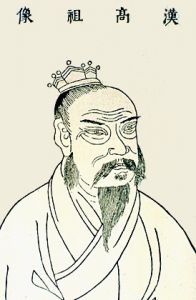
They brought down Qin, the first dynasty to unify China. Liu Bang then founded the Han dynasty, which lasted for roughly 400 years. And yet, compared with more dramatic figures, Liu Bang often has a surprisingly plain image.
Many people know that Liu Bei, the great star of the later Three Kingdoms era, claimed descent from Liu Bang when he raised his banner. But far fewer know what Liu Bang himself was actually like.
In stories, Liu Bang is often described as a man of virtue, much like Liu Bei. But when you look at his actions, another picture appears: a moody, free-spirited man who somehow gathered brilliant people around him and rose from almost nothing to become emperor.
A hard-drinking, woman-chasing free spirit
Liu Bang, later known as Emperor Gaozu of Han, spent much of his youth living like a wandering rogue. He did not seriously take over his family’s work. Instead, he drank, chased women, and behaved like a classic pleasure-seeker.
Even so, people seem to have liked him. It was said that if Liu Bang was drinking at a tavern, the place would become busy simply because he was there. His personality attracted people, and one of the men who knew him from this period was Xiao He, who would later play a major role in helping him become emperor.
Tradition also says that Liu Bang had a face known as a “dragon face,” a sign of imperial destiny, and that he had 72 moles on his thighs, 72 being considered an auspicious number. These details belong to the legendary image built around him, so they should be taken cautiously.
Liu Bang did not receive much serious education before middle age. Even so, when he moved to Pei County, a powerful local figure named Lü Gong judged him highly and gave him his daughter, Lü Zhi, as a wife.
By then Liu Bang already had two children. He still was not exactly known as a diligent worker. But when the Chen Sheng and Wu Guang Rebellion broke out against Qin rule, Liu Bang was pushed forward as a representative of Pei County. Suddenly, this carefree man found himself leading a force of around 2,000 to 3,000 soldiers.
His meeting with Zhang Liang
Liu Bang fought in various places, but at first he did not achieve much. He was betrayed by someone from his own home region and temporarily lost his hometown of Feng. He managed to retake it, and around this time Zhang Liang entered his service.
Zhang Liang had once been a man of the state of Han during the Qin period. He was also famous for attempting to assassinate the First Emperor of Qin while the emperor was still alive. The assassination failed. Zhang Liang tried to gather troops of his own, but he could not attract many.
Meanwhile, Chen Sheng, one of the original leaders of the anti-Qin rebellion, had been killed. After that, Jing Ju, a former official of Chu, stepped in and claimed the title of King of Chu.
Zhang Liang was on his way to serve Jing Ju when he met Liu Bang, who had also come hoping to borrow soldiers.
Zhang Liang’s strategies proved extremely useful to Liu Bang. Later, Zhang Liang would be remembered as one of the “Three Heroes of the early Han.” He had reportedly met several anti-Qin commanders before, but none of them made proper use of him.
Liu Bang, however, had not started as a professional soldier. Perhaps because of that, he listened honestly to Zhang Liang’s advice and followed it. This led to major successes. In a strange way, Liu Bang’s lack of military experience worked in his favor.
Liu Bang changes sides freely
Around this time, trouble arose for Jing Ju, the self-proclaimed King of Chu.
Liu Bang had been able to expand his forces with Jing Ju’s help, but he still could not take Feng. Then conflict broke out between Jing Ju and Xiang Liang, the uncle of Liu Bang’s future rival, Xiang Yu.
Xiang Liang advanced north. He was considered the legitimate heir of Xiang Yan, a great general of Chu, and his momentum was overwhelming.
Seeing this, Liu Bang joined Xiang Liang after Xiang Liang defeated and drove off Jing Ju. Liu Bang was then entrusted with troops.
Xiang Liang raised King Huai as the symbolic leader of the anti-Qin movement. From this point, Xiang Yu and Liu Bang, both serving under the same larger banner, began fighting Qin while also moving toward their own rivalry.
Liu Bang advances without fighting
Within the anti-Qin coalition under King Huai, the fiercest fighting was done by Xiang Yu.
Xiang Yu’s uncle, Xiang Liang, had been killed by Zhang Han, the most dangerous Qin general. Zhang Han was one of the few capable commanders left in the corrupt Qin system, and he had already defeated Chen Sheng during the earlier rebellion.
Xiang Yu fought Zhang Han, who is said to have commanded around 200,000 men, and defeated him.
Liu Bang, meanwhile, marched toward Guanzhong. Following Zhang Liang’s advice, he succeeded in taking many places without bloodshed. By that stage, rebellion had spread widely, Qin power was already weakening, and many people wanted liberation from Qin rule.
While Xiang Yu was fighting Qin head-on, Liu Bang reached Xianyang first. He then tried to block Xiang Yu, who came afterward and attempted to enter Guanzhong.
Xiang Yu was furious and prepared to attack Liu Bang. Alarmed, Liu Bang quickly used Xiang Yu’s uncle as an intermediary, invited Xiang Yu in, held a banquet, and made peace.
This episode is famous as the “Feast at Hongmen,” though some parts of the story may be literary invention. What is certain historically is that Liu Bang acknowledged his complete defeat before Xiang Yu.
Sent away to Shu and Hanzhong
After Xiang Yu finished off Qin, he took the lead in dividing land and rewards among the commanders of the anti-Qin coalition.
Xiang Yu’s position was overwhelmingly stronger than Liu Bang’s, but Liu Bang had also made real achievements, so Xiang Yu could not ignore him completely.
Instead, Liu Bang was made king of Shu and Hanzhong, which were considered remote frontier regions at the time. Curiously, about 400 years later, Liu Bei, who also rose from Pei County, would first establish his power in Shu as well.
At this point, Liu Bang’s army was beginning to fall apart. Many soldiers hated being sent to the frontier and deserted.
Among those who nearly left was Han Xin, the man who would become Liu Bang’s key military commander. Han Xin also almost gave up on Liu Bang, but Xiao He stopped him from leaving. Liu Bang, who had previously ignored recommendations about Han Xin, finally promoted him to grand general.
In the end, Han Xin’s achievements would decide the struggle between Xiang Yu and Liu Bang. By accepting Han Xin, Liu Bang prepared to return to the central plains and face Xiang Yu, who had taken the title Hegemon-King of Western Chu.
Liu Bang’s army becomes enormous
Following Han Xin’s advice, Liu Bang next succeeded in forming an anti-Xiang Yu coalition.
Xiang Yu had ruled through force, which created resentment among many feudal lords. This gave Liu Bang an opening, and many of them joined his side.
When Liu Bang and Xiang Yu faced each other, Liu Bang’s army is said to have numbered 560,000. Xiang Yu, returning from a northern expedition, had only about 30,000 troops.
Despite this overwhelming difference, Xiang Yu’s army smashed Liu Bang’s massive force and won.
One explanation is that Liu Bang’s 560,000 troops were united only by their dislike of Xiang Yu, not by real discipline or loyalty. When Xiang Yu charged, they scattered. Another story says Liu Bang’s army had become careless because the numbers seemed so favorable, spending day and night in banquets and losing all sense of danger.
Either way, the huge anti-Xiang Yu coalition broke apart. Liu Bang was forced to retreat for a time.
Worse still, many lords who had gathered on the anti-Xiang Yu side began switching back to Xiang Yu. Liu Bang was forced to reflect deeply and wait for a chance to rise again.
Han Xin’s great advance
After retreating, Liu Bang and his allies planned a new strategy to pressure Xiang Yu from two directions.
Liu Bang would face Xiang Yu directly, while Han Xin captured the surrounding cities and fortresses.
Han Xin advanced with extraordinary speed. He took more than 70 cities and forts, expanding his power until he stood almost alongside Liu Bang and Xiang Yu as a major force. After bringing the state of Qi under his control, Han Xin became someone even Xiang Yu had to take seriously.
Even then, Han Xin did not betray Liu Bang.
Liu Bang defeats Xiang Yu through a broken truce
After a long war, Xiang Yu and Liu Bang agreed to a ceasefire.
But as Xiang Yu tried to return home, Liu Bang broke the agreement and advanced against him from behind. Liu Bang then called on Han Xin to join the attack.
At first, Han Xin ignored the request, and Liu Bang was driven into danger by Xiang Yu’s forces. Eventually, however, Han Xin arrived with a massive army of around 300,000 men.
With Han Xin’s forces joining the battle, Xiang Yu was cornered and took his own life.
In terms of raw martial power and momentum, Xiang Yu had often seemed superior. But he was ultimately defeated by Liu Bang’s surprise attack and Han Xin’s loyalty.
With that, Liu Bang unified China and rose from an ordinary background to become the first emperor of the Han dynasty.
What kind of person was Liu Bang?
Historians have evaluated Liu Bang in many different ways. Often, he is praised in a Confucian style as a ruler whose virtue allowed him to defeat Xiang Yu.
But the stories about him are not all noble. One anecdote says that while fleeing from Xiang Yu, Liu Bang pushed his wife and children out of his carriage, and became angry when Xiao He criticized him for it. After becoming emperor, he also treated Han Xin, one of his greatest contributors, coldly, eventually leading to rebellion.
Liu Bang himself is said to have admitted that without the Three Heroes, he could never have gained the realm.
Perhaps his free, unpredictable nature worked in his favor. He was supported by many remarkable retainers, and through them he became emperor. At the same time, those retainers truly were drawn to him, so it would be too simple to say he was merely lucky.
For travelers interested in the historical sites connected to Qin, Han, Xianyang, Guanzhong, Shu, or Hanzhong, remember that many places are modern towns, protected ruins, or museum areas today. Visit only public sites, follow local rules, and do not enter restricted ruins or private land.
Japanese Language
三国志時代の始まる約400年前、中国の覇権を争ったのが項羽と劉邦の2人でした。秦という初めての統一王朝を倒し、約400年間続いた漢の国を築いたにも関わらず余り華やかなイメージがないのが劉邦です。後に、三国志での大スターである劉備が、その子孫を名乗って旗揚げしたことは有名ですが、劉邦自身がどういう人物であったのかを知っている人は意外と少ないです。物語として描かれる劉邦は、劉備と同じく人徳の人であったと言われていますが、実際の行動を見ていくとかなりの自由人であったことが分かってきます。
そこで今回は漢という大きな帝国を築いた高祖、劉邦について紹介していきます。女好き&自由人の代表だった劉邦。。画像引用元: 劉邦 。劉邦は若い頃からいわゆる侠客として遊び歩く生活をしていました。実家の仕事を継ぐということもなく、酒を飲み、女を追いかけるという典型的な遊び人です。しかし、劉邦は人柄が好かれていたため、飲み屋などに劉邦が居るだけでその店が繁盛するなど、多くの人から慕われていたようです。後に劉邦が皇帝になるために活躍した 蕭何(しょうか)は、この頃からの付き合いがあったのです。
。劉邦は当時「竜顔(りゅうがん)」と呼ばれる人相をしており、さらに太ももに吉数である72個のホクロがあったとも伝わっています。中年になるまで特に大きな勉学などをした経験もなかったですが、当時の沛県に移って来た呂公という有力者にも、その人柄を評価され、娘である呂雉(りょち)を妻に娶ります。既に子供が2人いましたが、特に仕事を真面目にしていたわけでもなく、陳勝・呉広の乱に乗じて沛県の代表に押し上げられて2千から3千の軍勢を引く軍人となりました。
張良との出会い。。劉邦は各地で転戦していたものの余り成果を大きく上げることが出来ないまま、劉邦は同郷の人物に裏切られて故郷の豊を一時的に失います。この豊を再び取り戻すことには成功するのですが、この時に劉邦の配下に入ったのが、秦の時代に韓の国の人物であった張良でした。あろうことか、張良は始皇帝の生存中に暗殺未遂を起こしたことでも知られています。暗殺は失敗し、自らも兵を集めようとしたものの、数がほとんど集まらないという状況の中、陳勝・呉広の乱の発起人であった陳勝が戦死し、その後に楚の公人であった 景駒が楚王として後釜を埋める形になっていました。
そこで、張良は景駒の配下になろうと向かっていたところで同じく兵を借りに来ていた劉邦と出会います。。張良の献策は劉邦にとって大きく有利に働き、後に三傑の1人として名を残す軍師・張良をこの頃に配下に受け入れたのです。張良は既に何人かの反秦連合の大将と会っていたと言われていますが、誰にも用いられることはありませんでした。しかし、劉邦はそもそも軍人ではなかったこともあり、素直に張良の献策を実行し、それによって大きな戦果を挙げていくことになります。
劉邦の素人さが逆に良い方向に働いた、もっとも顕著な例だと言える出会いですね。それだけ劉邦が素直な人物であったことは良く分かるなあ。劉邦の自由奔放な勢力移動。この時期に、楚王を名乗った 景駒に問題が発生します。。劉邦は 景駒の手伝いがあって兵力を伸ばしていたのですが、肝心の豊を攻め落とすことが出来ませんでした。。そして、後の宿敵となる項羽の叔父、 項梁と景駒の間に争いが起きてしまうのです。。北上してきた項梁は楚の大将軍、項燕の正当な血筋であり、勢いも圧倒的でした。
。これを悟った劉邦は、 景駒と戦って敗走させた 項梁の配下になり、軍を任されるようになります。。項梁は反秦の盟主として懐王を擁立し、ここから同じ配下として既に力を持っていた項羽と劉邦は争うように反秦の戦いを始めます。。劉邦の戦わない進軍。。懐王を盟主とした反秦連合軍の中で、もっとも苛烈な戦いをしたのは項羽でした。。秦軍最大の難敵であった 章邯によって実質的な反乱軍の盟主であった叔父の項梁が殺されていたことも相まって、項羽は20万を率いていたと言われる章邯と戦って勝利します。
。章邯は腐敗した秦の中でもほぼ唯一残っていた武将であり、反秦連合にとって大きな壁になっていました。陳勝・呉広の乱の際に、陳勝を敗走させたのも章邯だったのです。。その一方。劉邦は関中を目指して進軍しますが、張良の献策によって多くの場所で無血開城させることに成功します。各地に反乱軍が起こっていた段階で、既に秦の国に力は残っておらず、むしろ秦からの開放を望んでいる人々も多かったのです。秦軍とまともにぶつかりあっていた項羽を尻目に、劉邦は先んじて咸陽に到達し、さらに後を追って関中に入ろうとした項羽を拒絶します。
これに大激怒した項羽は、劉邦に攻撃しようとしますが、これに慌てた劉邦は急いで項羽の叔父を通じて項羽を招き入れて、酒宴を開き、和睦することになります。この時のエピソードは「鴻門の会」として語られていますが、創作である可能性も指摘されています。史実として間違いないのは、劉邦が項羽に完全敗北を認めたことだね。蜀、漢中に左遷された劉邦。。項羽によって、秦の息の根が止められた後は、項羽が主体となって反秦連合の将軍たちに土地などを分け与えます。この時、立場的には圧倒的に項羽が上であったものの、劉邦にも功績があったことから、恩賞を与えない訳にはいかなかったのです。
そこで、劉邦を当時は辺境の地とされていた蜀、漢中の王に封じます。奇しくも、400年後、沛県から立身出世した劉備と同じく、蜀の地にまずは身を置くことになるのです。しかし、この頃の劉邦の軍は乱れつつあり、辺境の地が嫌で逃亡兵も多数発生します。その中にいたのが、劉邦にとって武の要となる大将軍韓信でした。韓信も一時は劉邦を見限りかけるものの、 蕭何によって引き止められ、劉邦はそれまでの推挙に見向きもしなかった韓信を大将軍に引き上げます。。結果から見れば、韓信の活躍によって項羽と劉邦の争いは決着に至るのですが、その詳細については韓信の記事をご覧下さい。
韓信を採用したことによって、中央で戦う準備が整い、西楚の覇王を名乗った項羽との決戦に向かうことになります。巨大勢力に膨れ上がった劉邦の軍。。韓信の献策を採用した劉邦は、今度は反項羽の連合軍を結成することに成功します。項羽は力で支配力を高めていった結果、諸侯の反感を買っており、これを契機に多くの諸侯は劉邦の勢力に味方することになります。劉邦と項羽が相対した時には劉邦軍は総勢56万と言われる大軍になり、項羽の軍勢は北上して遠征から引き返した3万の軍勢だけでした。
圧倒的な軍勢を持っていた劉邦でしたが、なんとここでは項羽の軍が劉邦の56万の軍を蹴散らして勝利します。一説によると、劉邦がこの戦いで集めていた56万の大軍にはなっていたものの、項羽への反感だけでまとまりがなかったことから、項羽の突撃によって散り散りにされたと言われています。また、あまりにも軍事力に差があったため、攻め上がっていた劉邦軍は日夜宴会に明け暮れており、油断しきっていたとも言われています。いずれにせよ、56万もの反項羽勢力は解散することになり、劉邦は一時的に撤退を余儀なくされます。
さらに、反項羽派として集まっていた諸侯の中からも項羽につく人物が続出したために、劉邦は深く反省し、再起のタイミングを伺います。韓信の大躍進。一度は撤退した劉邦たちは、再び項羽を追い込むために、二手に分かれる作戦を練ります。これによって劉邦は直接項羽と対決し、その間に韓信が周囲の城や砦を落としていくことになります。韓信はここでも大躍進し、70以上の城や砦を落とし、項羽と劉邦に並ぶほどの勢力まで拡大していきます。斉の国まで支配下においた韓信は、項羽からも一目置かれる存在となりますが、劉邦を裏切ることはありませんでした。
だまし討ちによって項羽を降した劉邦。。項羽と劉邦は長い期間の戦いを経て、お互いに休戦協定を結びます。祖国に帰ろうとした項羽の背後を打つように劉邦は協定を破棄して進軍し、韓信にこれに参加するように呼びかけます。一度は韓信に無視され項羽軍に追い詰められるも、韓信がようやく30万の大軍を引き連れて合流したことによって項羽は追い詰められ、自決してしまいます。武力や勢力では大きく勝っていた項羽は、劉邦のだまし討ちと韓信の忠義心によって敗北してしまいます。
こうして劉邦は中国を統一し、何も持たない身分から漢の国の初代皇帝として君臨することになったのでした。劉邦の人物評。劉邦の評判は歴史家によって様々な解説がありますが、多くの場合は人徳によって項羽を制した儒教的な考え方で評価されることが多いです。しかし、項羽に追い詰められて逃げる際に、妻子を馬車から降ろし、これを 蕭何が諌めるとこれを怒ったという逸話が残っていたり、皇帝となった後には最大の功臣であった韓信を冷遇してしまい、反乱を招いたりもしています。
。劉邦自身も三傑がいなければ自分の天下はなかったと語っていたということから、自由な行動が逆に功を奏する結果となり、多くの臣下に支えられて皇帝になれた人物であったのかも知れません。しかし、これらの臣下が劉邦に魅せられたこともまた事実であるので、単純に運が良かっただけの人物とも言い難いところです